Even though many
of today’s
fishing lines
have become more
complex and
technologically
advanced than
ever,
monofilament
remains a
favorite among
the majority of
anglers who turn
to its
versatility and
reliability.
Through
innovative
design, Cortland
Line has
developed the
Camouflage
monofilament to
deliver superior
performance
while still
maintaining the
ease of use and
reliability of
traditional
mono.
Utilizing nearly
100 years of
braiding
experience and
technology,
Cortland Line,
of Cortland New
York, was an
early pioneer in
the formulation
and extrusion of
nylon
monofilament
fishing line.
Their first
lines were
introduced in
1960 and
achieved such
strong sales
that they have
remained in
production for
over 50 years.
Over the years,
Cortland has
added and
discontinued
lines as a
result of the
changes and
improvements
made to the
design and
technology of
monofilament and
copolymer lines.
Today, Cortland
offers a broad
selection of
all-purpose and
specialty
high-performance
monofilament
lines to meet
the needs of
every type of
angler.
Cortland Camo
boasts high
abrasion
resistance and
that rivals the
best lines in
the world, even
while adding a
super supple
memory free
construction.
The
match-the-water
coloration
feature of the
line allows you
to cut back the
line to the
color that
matches water
conditions,
giving you a
virtually
invisible
underwater
connection to
your bait or
lure.
A question that
often perplexes
anglers is,
why do
fish get spooked
by fishing line?
For instance, a
continuous
connection
leading out of
your lure or
bait shouts
“something’s
wrong” to any
wary fish.
Cortland has
solved this
problem by dying
its Camo in
two-foot
increments, thus
eliminating the
connection and
putting fish off
guard to
underwater color
contrasts.
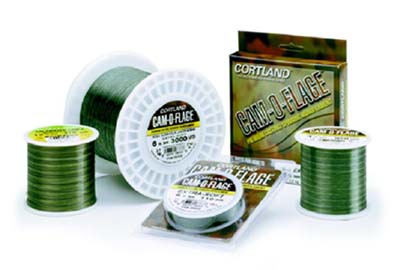
I received over
half a dozen
spools of 8lb,
10lb, and 12lb
Cortland Camo
for my bass
fishing in 2011.
The line used
most frequently
was the 8lb. as
it proved to be
an excellent
multi-purpose
line on medium
heavy action
spinning
equipment for
clear water
smallmouth bass
fishing, and
probing the
shallow
weedlines for
largemouth bass.
Meanwhile, both
the 10lb and
12lb were used
exclusively on
baitcasting
equipment for
cranking and
pitching
plastics.
Impressions
Presently, line
manufacturers
across the world
are heavily
investing time
and resources on
researching and
developing new
monofilaments
that outperform
the competition.
Several new
fishing lines
are developed to
possess singular
specific
characteristics
such as less
visibility, zero
memory, more
limpness,
greater tensile
strength and
resistance to
sunlight and
abrasive
conditions.
Since their
debuts, many of
these newly
advanced lines
have experienced
successful sales
due to brand
reputation or
else a single
specific
characteristic.
However, many of
them are failing
anglers because
they aren’t
catering to the
multi-purpose
needs and
requirements of
anglers, or
adapting to the
ever-changing
conditions in
fishing.
Unlike most
other
monofilaments,
which are
available in
multiple line
colors, Cortland
Camo is is
available in one
multi-colored
line color:
Camouflage!
The unique
property behind
camouflage
colored fishing
line is that
light
transparency has
little to no
underwater
effect towards
the line’s
underwater
visibility.
Camo’s unique
color scheme
enables the line
to blend itself
into all
underwater
environments
regardless of
light levels.
Consequently,
this property
eliminates all
chances of fish
ever becoming
wary or
accustomed to
seeing the line
as it is in use
underwater.
Under
the Gun
Majority of my
fishing takes
place throughout
the Upper
Midwest Great
Lakes Region
where largemouth
and smallmouth
bass are in
abundance. My
favorite way to
catch bass is by
using 6 to 10lb.
monofilaments on
spinning gear.
In order to be
successful on
the water, using
a fishing line
that can be
applied to
several
techniques and
employed in all
conditions is
mandatory.
I have fished
for bass with
just about every
brand of
monofilament
line imaginable.
In order to
properly
administer my
testing and to
determine
whether Cortland
Camo proved to
be a winner, my
testing was
based on factors
such as casting
& retrieving,
strength &
durability, and
performance.
Casting &
Retrieving
Most folks agree
with me that
fishing is fun,
but when you
lose a huge
smallmouth bass
due to
break-offs or
poor performing
line, that lone
incident can
lead to a lot of
disappointment
and may mentally
affect you for
an entire
season.
In order to
catch bass that
run an average
size of 3 to 5
lbs, without
question a
quality line
needs to be
used.
Throughout my
review period,
the Cortland
Camo I used was
predominantly
fished with
bottom bouncing
plastics such as
tube jigs and
creature baits;
Presentations
that require
sensitivity to
detect the
bottom and
bites, and
strength to
bring big fish
into the boat.
Cortland Camo
casts easily and
has a nice feel
to it. Off the
spool, it is
extremely smooth
and quickly
glides through
the rod guides
without little
friction and
resistance. What
allows for
superb casting
are its low
spool memory and
limpness. The
only factor that
severely hinders
casting and
handling
performance is
the line’s
intolerance to
sunlight and UV
rays. But tell
me this: Which
monofilament
fishing line
isn’t resistant
to the sun?
Strength &
Durability
A line’s
breaking
strength is an
indication of
the amount of
force it takes
to break the
line with a
steady, straight
pull. In my
opinion, this is
the most
important factor
in determining
whether or not a
particular
fishing line is
good or not.
The Cortland
Camo I
exclusively
fished with for
big smallmouth
bass was 8lb.
This line
demonstrated its
abilities in
stretch and
breaking limits
by fighting off
snags. In
addition, it
passed its
abrasion
resistance tests
with high marks
as frays and
other weakening
points were
seldom
experienced when
fishing
rock-infested
waters.
Bass anglers
typically love
to fish around
structure and
heavy cover
because of one
reason: That’s
where the big
fish like to
feed and live.
When fishing
near structure
such as downed
trees, rock
piles, and weed
beds, fishing
line takes a
first-class
beating. This is
exactly what I
attempted to put
Cortland Camo
through. I often
ran my baits
through dense
structure to
test the line as
well as to catch
fish.
Abrasion
resistance is
the measure of
how easily a
line is scuffed,
nicked or
scratched by any
hard objects it
rubs against.
Thin lines are
less abrasion
resistant than
fat lines
because any
microscopic
knick will take
a proportionally
bigger “bite”
that reduces the
amount of
remaining nylon
in a thin line
much more than
in a thick line.
Cortland Camo is
specially
formulated for
extra abrasion
resistance,
which is a big
help when
fishing around
rocks and snags.
This line is
tough, but isn’t
a steel cable or
an otherworldly
object. Fishing
line does
experience
damage when
continuously
fished through
rough terrain.
Fishing lines
like Cortland
Camo are
developed to be
abrasion
resistance.
Looking back at
my real world
tests, the line
fared better
than expected.
Only after long
periods of
running the line
through
structure did
the line appear
damaged, but
only with minor
frays. Cortland
Camo is a lot
tougher and
durable than
many other
fishing lines I
have dedicatedly
used before.
Applications
Throughout the
history of
fishing, lines
have evolved
from a simple
single strand to
the modern
technologically-advanced
braided, hybrid,
and copolymer
lines where each
has its own
benefits.
Cortland, a
pioneer in
fishing line
manufacturing
and development,
is making its
mark in the line
market by
offering bass
anglers a
strong,
dependable, and
multi-purpose
monofilament
such as Camo.
Although
Cortland Camo
might be
difficult to
find at most
major tackle
retailers, the
line is
definitely out
there, and
available online
through
Cortland’s
website and its
dealers.
Cortland Camo is
a line without
limits, and a
line that
doesn’t lie to
anglers about
its performance
and value. It is
superb in
casting,
superior in
abrasion
resistance,
remarkably
invisible to
fish, and is
very smooth.
The years of
line research
conducted by
Cortland
suggests that
Camo is among
the top in
quality, and
brings out the
trust and
confidence among
its fishermen.
High regards
like these
ultimately gives
Camo the
potential of
becoming a big
hit amongst bass
anglers.
Whether you are
on the water to
fish with power,
or finesse for
bites, I highly
recommend this
monofilament
line for all of
your big bass
fishing needs.
No matter the
application, or
where you fish,
Cortland Camo
won’t let you
down.
MSRP:
$4.99 –
$8.99
Available in
spools of 4/ 6/
8/ 10/ 12/ 14/
17/ 25/ 30
http://www.cortlandline.com
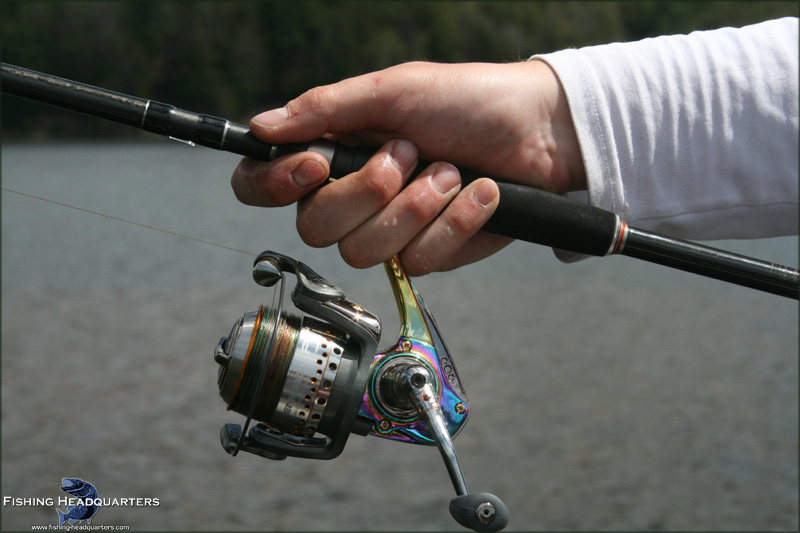
8 lb
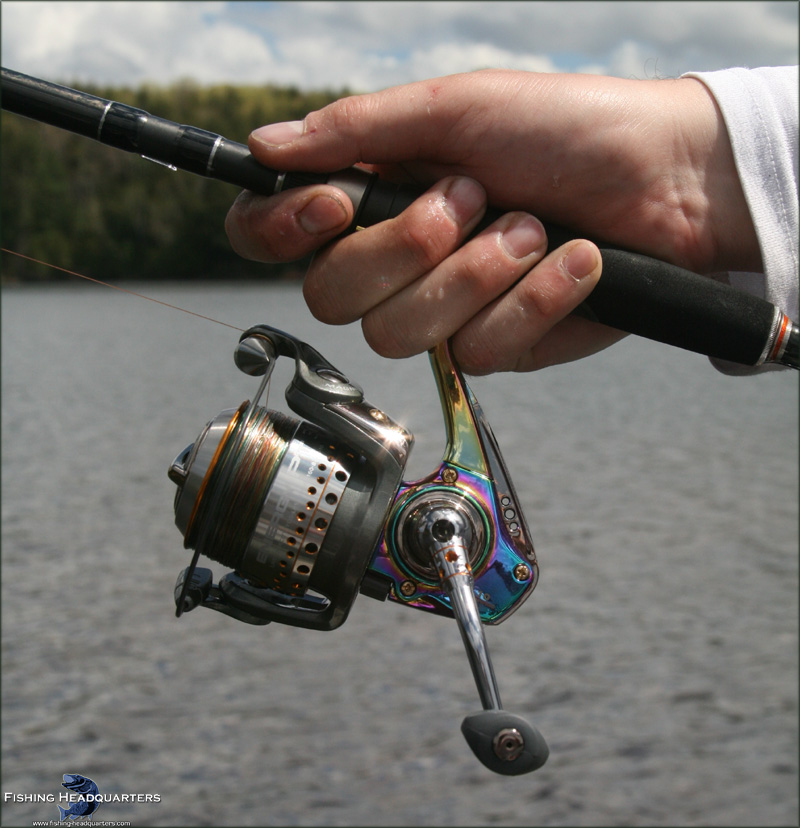
Cortland Camo is
spooled onto one
of my main big
smallmouth bass
set-ups: Quantum
Energy 30PTi
reel with a 7ft
4in medium heavy
Quantum
Superlite rod.
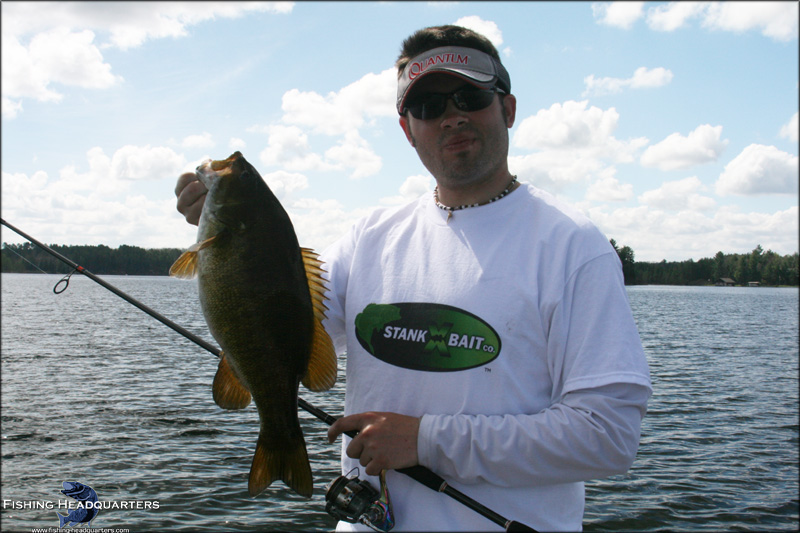
Just one of
several big
smallmouth bass
taken with
Cortland Camo in
2011.
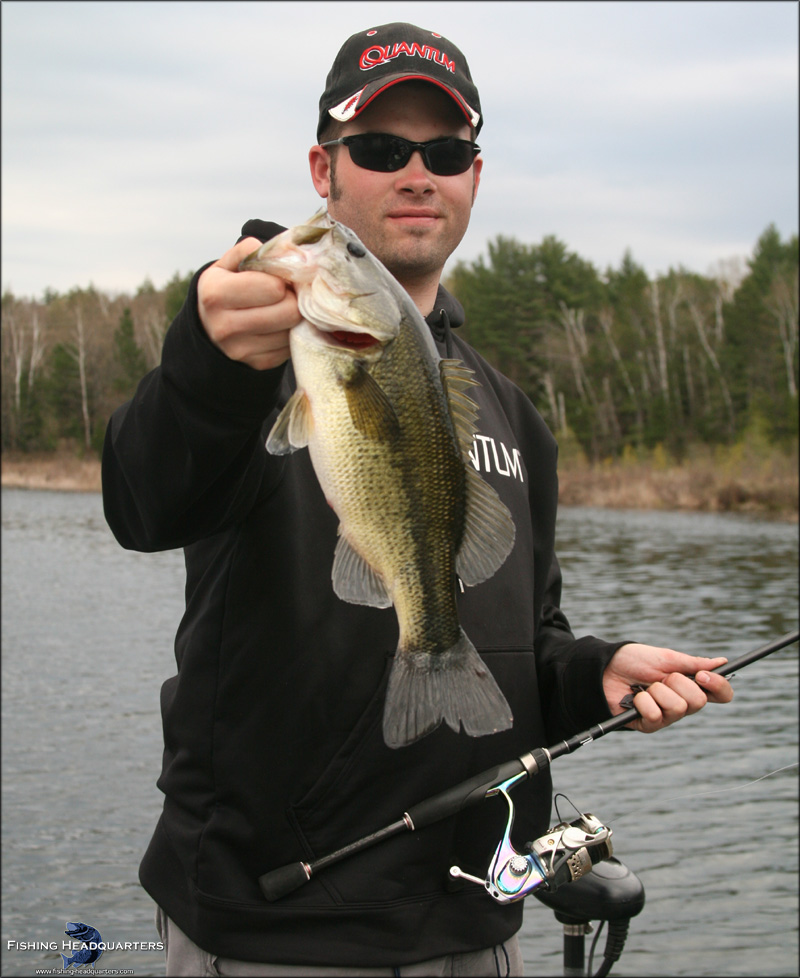
Besides proving
to be an
excellent line
for clear water
smallmouth bass
fishing,
Cortland Camo is
just as good, if
not better, at
extracting
largemouth bass
from the weedy
shallows.
Get some!